
What Is Included in a Structural Inspection Report?
What Is a Structural Inspection Report?
A structural inspection report is a professional document that explains the observed condition of a building’s structural components. It typically focuses on the parts of a property that support, transfer, or resist loads, such as the foundation, framing, beams, columns, walls, roof structure, slab, and other load-bearing systems.
Unlike a general home inspection report, which usually reviews many visible systems in a property, a structural inspection report goes deeper into the performance and condition of the structure itself. The goal is not just to say that a crack, slope, sag, or movement exists. The value of the report is in explaining what was observed, why it may matter, what areas were reviewed, what limitations existed, and what next steps may be appropriate.
For property owners, buyers, sellers, adjusters, carriers, attorneys, and contractors, structural reports create clarity. They help organize the facts around visible damage, suspected movement, possible construction defects, storm-related issues, foundation concerns, or questions about structural integrity.
A strong structural inspection report should be clear, objective, and useful. It should not be filled with vague language or unsupported assumptions. When the report is part of an insurance claim, appraisal, dispute, or repair decision, clarity becomes even more important. The report may help determine whether damage appears related to foundation movement, construction defects, wind, water intrusion, impact, deterioration, improper installation, or another cause.
At Texas Piers Consulting, we understand that a report is more than paperwork. In forensic structural engineering and claims support, the report becomes a decision-making tool. A good report should help reduce uncertainty, document the condition of the property, and give all parties a clearer path forward.
When Do You Need a Structural Inspection Report?
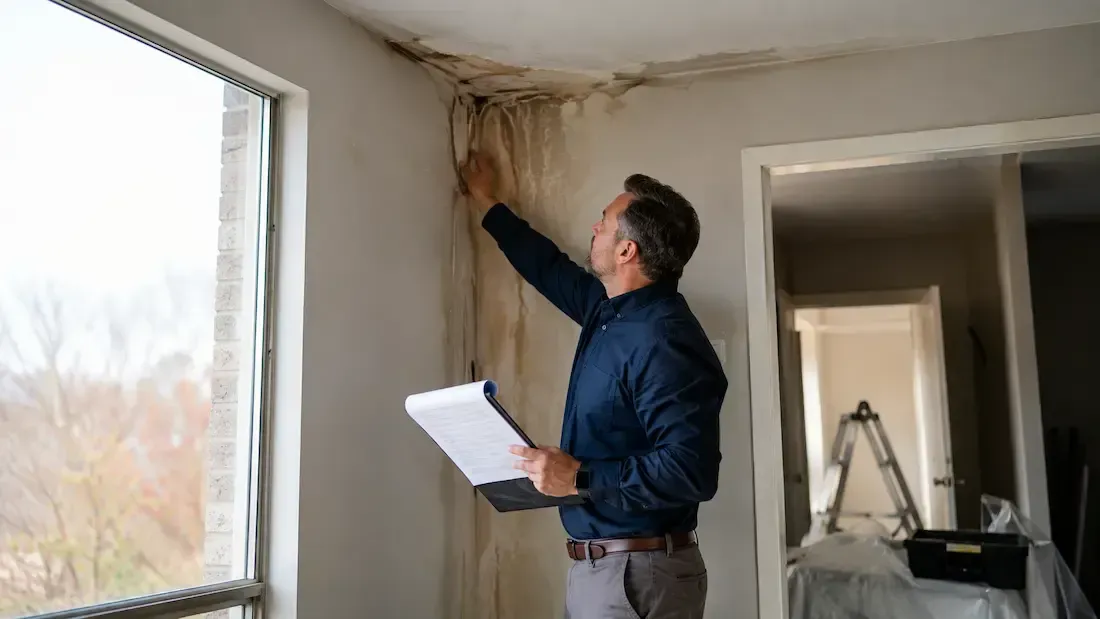
You may need a structural inspection report any time there is a serious question about the condition, safety, performance, or cause of damage in a building. For many people, the need starts with something visible: a crack that keeps growing, a door that no longer closes correctly, a sloping floor, a sagging roofline, water intrusion, or damage after a storm.
A structural inspection report is often requested during a real estate transaction. A buyer may want more clarity before purchasing a property. A seller may want to document the condition of the structure before listing. A lender, agent, or home inspector may also recommend further evaluation if structural concerns are observed.
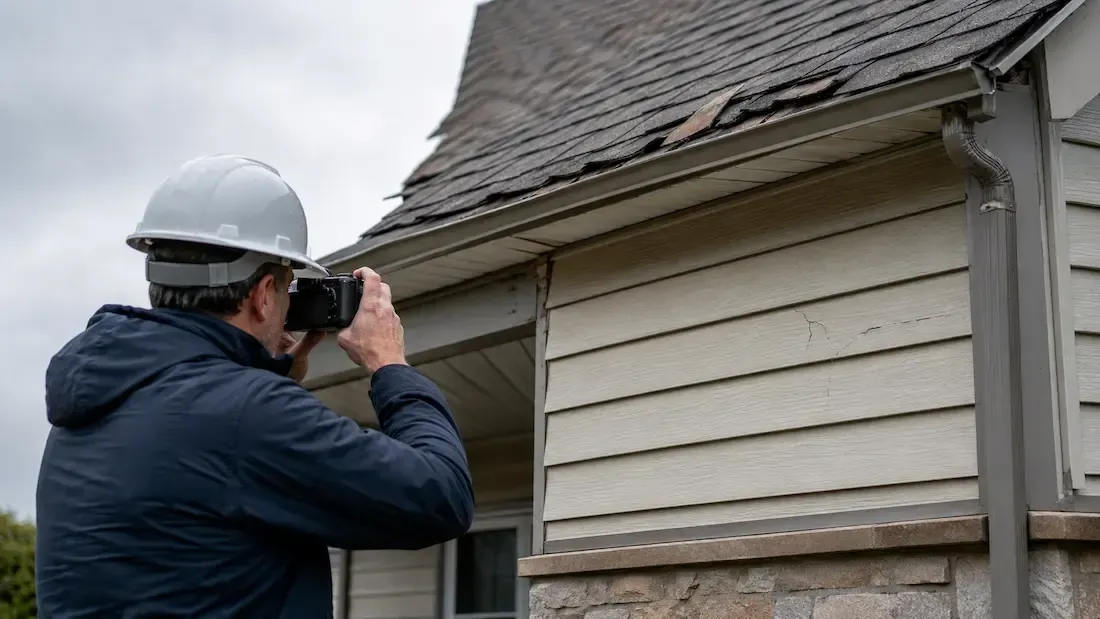
Another common reason is an insurance claim. After wind, hail, fire, flood, impact, or other property damage, a structural inspection report may help document the condition of the building and support the claim process. In these situations, the report should be evidence-based and clearly written so adjusters, carriers, appraisers, attorneys, or property owners can understand the findings.
You may also need a report before a repair or renovation. If a contractor plans to remove a wall, modify a roof structure, repair foundation movement, replace beams, or change load-bearing components, a structural evaluation can help determine what is required before work begins.
Structural inspection reports are also useful when there are signs of possible construction defects. For example, if a new or recently remodeled building shows cracking, sagging, movement, water intrusion, or framing problems, a report may help determine whether the issue is related to design, workmanship, materials, installation, soil movement, drainage, or another cause.
In our work with property damage assessments and forensic structural evaluations, we see how important timing can be. The sooner the condition is documented, the easier it is to preserve evidence, understand the sequence of damage, and avoid confusion between old conditions and new damage.
What a Structural Inspection Report Does Not Always Include
A structural inspection report is valuable, but it is important to understand its limitations. Not every report includes the same level of investigation, testing, design, or repair planning. The scope of work matters.
Most structural inspections are primarily visual inspections unless otherwise stated. That means the professional observes accessible areas and visible conditions. They may review cracks, framing, foundation elements, roof structure, walls, floors, drainage patterns, and other signs of distress, but they may not open walls, remove finishes, excavate foundations, or perform laboratory testing unless those services are specifically requested.
A structural inspection report also does not always include engineering calculations or structural design drawings. If repairs require engineered plans, beam sizing, foundation design, or load calculations, that may be a separate service.
The report may not include guaranteed repair costs. Some reports offer general repair recommendations or note that cost estimating is outside the scope. In other cases, cost opinions may be developed separately by contractors, estimators, building consultants, or appraisers.
Another limitation is that the report may not cover every building code issue. A structural inspection may reference code-related concerns when relevant, but a full code compliance review is different from a focused structural inspection.
The report should clearly state these limitations. This protects everyone involved because it explains what the inspection did and did not evaluate. A strong report does not pretend to know what could not be verified. Instead, it tells the reader when additional investigation, destructive testing, design review, or specialist evaluation may be needed.
This is especially important in forensic and claims-related work. Clear limitations do not weaken a report. They make it more credible.
FAQs About Structural Inspection Reports
What are structural reports?
Structural reports are professional documents that describe the condition of a building’s structural components. They may evaluate foundations, framing, walls, beams, columns, roof structures, slabs, and other load-bearing systems. These reports are often used for real estate decisions, repairs, insurance claims, appraisals, disputes, and forensic evaluations.
What does a structural inspection report include?
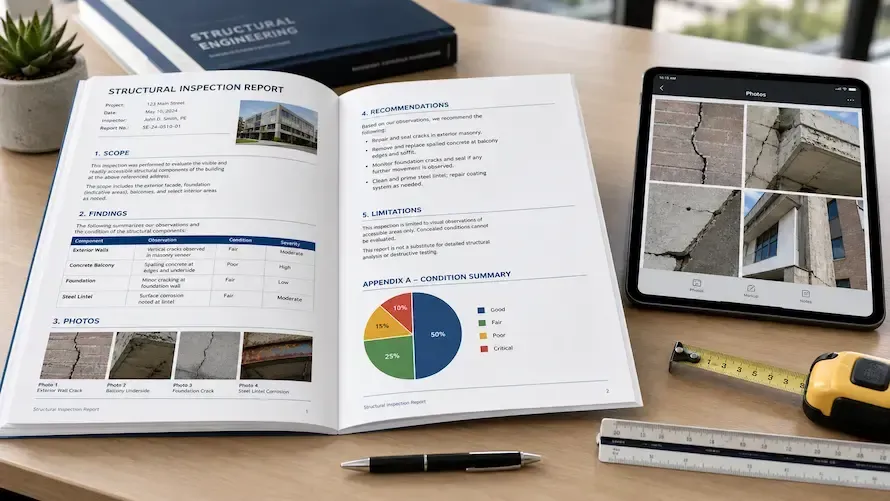
A structural inspection report usually includes property information, inspection date, purpose and scope, areas inspected, inaccessible areas, observations, photos, findings, professional opinions, recommendations, limitations, and inspector or engineer credentials. The exact contents depend on the scope of the assignment.
Who prepares a structural inspection report?
A structural inspection report may be prepared by a qualified structural engineer, forensic engineer, building consultant, or other professional with experience evaluating structural conditions. For complex damage, claims, or structural integrity concerns, working with a qualified structural professional is especially important.
Is a structural inspection report the same as a home inspection report?
No. A home inspection report usually reviews many systems in a property, such as electrical, plumbing, HVAC, roofing, appliances, and general visible conditions. A structural inspection report focuses specifically on the building’s structural components and the conditions that may affect structural performance.
Can a structural inspection report be used for an insurance claim?
Yes. A structural inspection report can be used to document observed damage, evaluate possible cause, clarify the extent of damage, and support the claims process. In insurance-related matters, the report should be objective, evidence-based, and clearly written.
Does a structural inspection report include repair recommendations?
Many structural inspection reports include repair recommendations or suggested next steps. However, the level of detail depends on the scope. Some reports may recommend further engineering design, contractor evaluation, monitoring, testing, or specific repairs.
Does a structural inspection report include repair costs?
Not always. Some reports include general cost opinions, but many do not. Repair pricing may require a separate contractor estimate, building consultant estimate, appraisal review, or detailed repair scope.
What are the limitations of a structural inspection report?
A structural inspection report may be limited to visible and accessible areas. It may not include destructive testing, hidden conditions, engineering calculations, design drawings, laboratory analysis, or full code review unless those items are specifically included in the scope.
When should I request a structural inspection report?
You should consider requesting a structural inspection report when you notice cracks, movement, sagging, foundation issues, storm damage, water-related damage, construction defects, or any condition that raises questions about structural integrity. It is also useful during real estate transactions, insurance claims, disputes, and major repairs.
Why is an unbiased structural report important?
An unbiased report helps all parties rely on the same evidence. In claims, disputes, and repair decisions, objective reporting reduces confusion and supports better outcomes. A report should be based on observed conditions, documentation, technical knowledge, and professional analysis—not speculation.
What Does a Structural Inspection Report Include?
A structural inspection report usually includes several key sections. The exact format may vary depending on the property, the purpose of the inspection, the professional preparing the report, and whether the report is being used for repairs, a real estate transaction, an insurance claim, appraisal, or legal matter.
The first part usually identifies the property information. This may include the address, inspection date, client name, claim number if applicable, weather conditions, type of structure, occupancy, and any relevant background information provided before or during the inspection.
The report should also include the purpose and scope of the inspection. This is one of the most important parts because it explains what the professional was asked to evaluate. For example, the scope may focus on foundation movement, storm damage, roof framing, wall cracking, slab performance, construction defects, or a specific area of concern.
Another important section is the list of areas inspected and areas not accessible. A structural inspection is often visual unless destructive testing, engineering calculations, material testing, or additional investigation is specifically requested. If attic areas, crawl spaces, wall cavities, roof surfaces, or foundation sections were not accessible, that should be clearly noted.
A complete structural inspection report may also include observations about the foundation, framing, load-bearing walls, beams, columns, roof structure, masonry, slab, drainage conditions, exterior elevations, interior cracking, deflection, settlement, or signs of distress.
The report should then present findings and professional opinions. This is where the professional separates basic observations from interpretation. For example, “a diagonal crack was observed above the window” is an observation. Explaining whether that crack is consistent with structural movement, material shrinkage, differential settlement, or another condition requires professional analysis.
Finally, the report may include photos, diagrams, recommendations, limitations, credentials, disclaimers, and next steps. In claim-related assignments, clear photo documentation and unbiased findings are especially valuable because they help carriers, adjusters, property owners, and other stakeholders understand the extent and possible cause of the reported damage.
Common Structural Issues Documented in Structural Reports
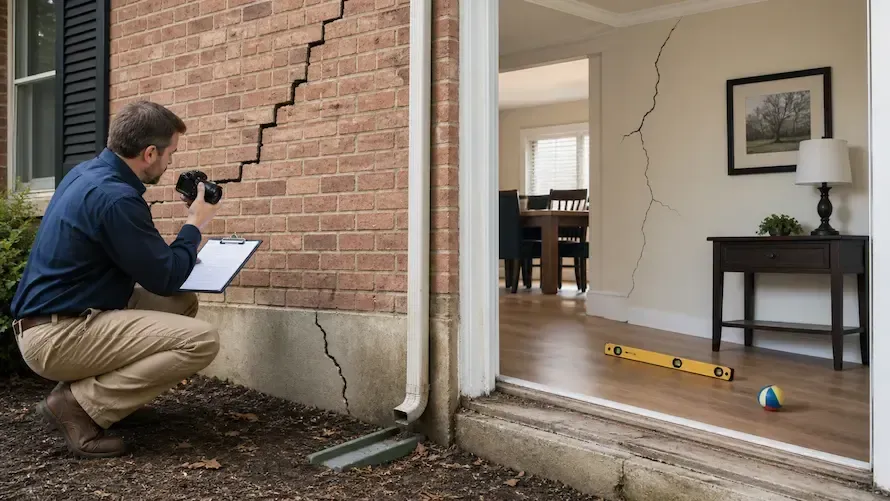
Structural reports often document problems that may not be fully understood during a general walkthrough. Some issues are cosmetic or minor. Others may indicate a deeper concern with the building’s load path, foundation performance, framing system, or resistance to environmental forces.
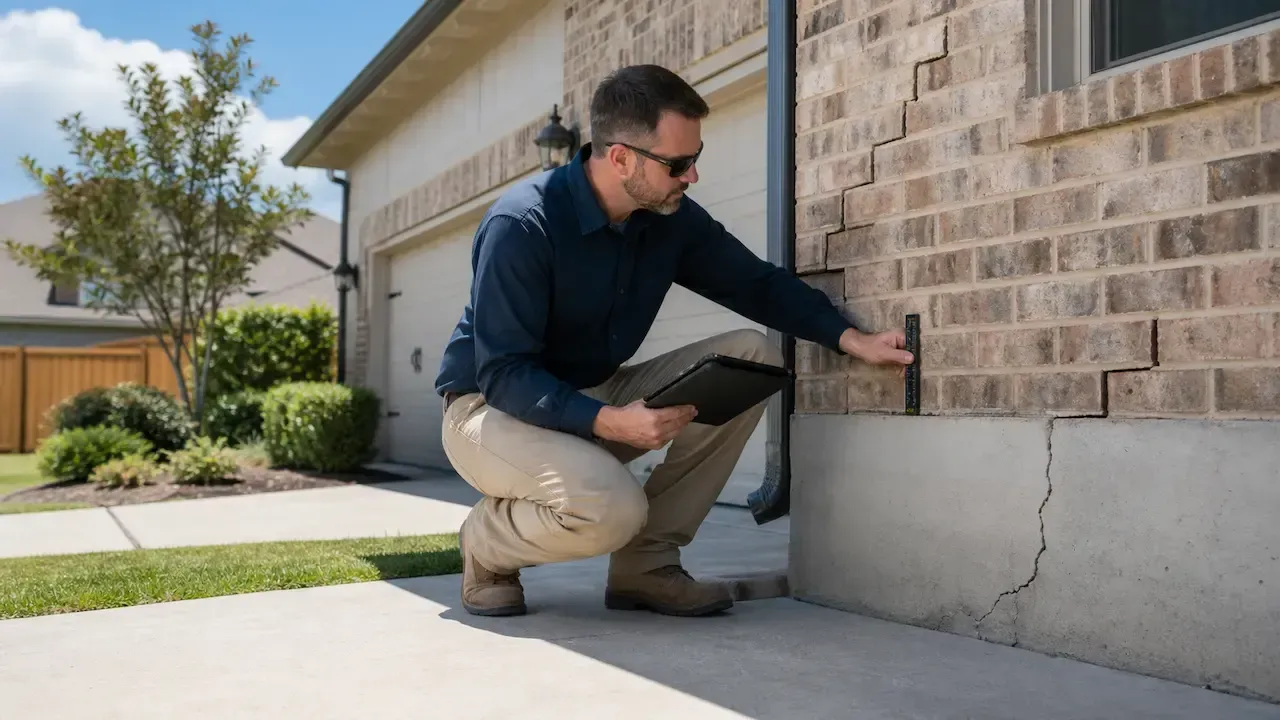
One of the most common categories is foundation movement. This may appear as cracks in interior walls, separation around windows or doors, sloping floors, cracks in brick veneer, uneven slab elevations, sticking doors, or gaps between building materials. In areas with expansive soils, drainage problems, or repeated moisture changes, foundation movement can become an important part of the structural evaluation.
Another common issue is cracking. Not every crack means structural failure. However, crack location, width, direction, pattern, displacement, and whether the crack is active or historic can all matter. A structural inspection report should document cracks carefully instead of making broad assumptions.
Structural reports may also address framing concerns. These can include damaged joists, altered trusses, improperly cut framing members, sagging roof lines, deflected beams, missing supports, over-spanned members, or construction that does not appear consistent with expected load-bearing requirements.
In insurance-related inspections, reports may document storm, wind, hail, water, fire, impact, or collapse-related damage. The report should avoid speculation and instead connect conclusions to observable evidence. Forensic structural analysis is especially important here because the question is often not only “what is damaged?” but also “what caused the damage?”
Construction defects are another frequent topic. These may include improper installation, inadequate support, framing errors, poor drainage design, insufficient connections, code-related concerns, or workmanship issues that affect structural performance.
A well-prepared structural inspection report brings these details together in a way that is understandable. It gives the reader more than a list of defects. It explains what was observed, where it was observed, why it matters, and what action may be needed.
How Structural Inspection Reports Support Insurance Claims
A structural inspection report can be extremely important in an insurance claim because it helps turn visible damage into organized, professional documentation. For carriers, adjusters, property owners, appraisers, and attorneys, the report can help clarify what was observed, where the damage is located, and whether the findings appear consistent with the reported cause of loss.
In a claim environment, the report should be objective. It should not be written to simply favor one side. The most useful structural reports are based on evidence, site conditions, inspection findings, photographs, measurements, construction knowledge, and professional analysis.
One of the most important parts of a claim-related structural inspection report is causation. Causation means identifying what likely caused the observed condition. For example, wall cracks may be related to foundation movement, moisture variation, construction defects, material shrinkage, impact, deterioration, or storm-related forces. A good report explains the reasoning instead of making unsupported conclusions.
Another important role is defining the extent of damage. A structure may have one isolated area of concern, or the damage may affect several connected systems. The report should help identify whether the issue appears localized or widespread.
Structural inspection reports can also support the development of a repair scope. Not every inspection includes full repair plans or cost estimates, but the report may recommend further evaluation, repairs, monitoring, engineering design, contractor review, or additional testing.
At Texas Piers Consulting, this is where forensic engineering and claims support overlap. The goal is to provide clear, unbiased reporting that helps reduce disputes and streamline the claims process. When the findings are documented clearly, the conversation can move away from guesswork and toward facts.
Final Thoughts: A Good Structural Inspection Report Should Create Clarity

A structural inspection report should make a complicated situation easier to understand. Whether the concern involves foundation movement, storm damage, framing issues, construction defects, water-related damage, or a property insurance claim, the report should organize the evidence and explain the findings in a practical way.
The strongest structural reports include a clear scope, detailed observations, photos, professional opinions, limitations, and recommendations. They separate what was seen from what was concluded. They explain when further investigation is needed. Most importantly, they help the reader understand the condition of the structure and the next reasonable step.
For property owners, a report can provide peace of mind or confirm that repairs are needed. For buyers and sellers, it can support better decisions during a transaction. For carriers and adjusters, it can clarify the cause and extent of damage. For attorneys, appraisers, and contractors, it can provide organized documentation that supports the larger decision-making process.
At Texas Piers Consulting, we believe structural reports should be clear, unbiased, and grounded in evidence. When structural questions affect property value, insurance coverage, repair decisions, or dispute resolution, vague answers are not enough. A well-prepared report helps move the conversation from uncertainty to facts.
If you are dealing with visible structural damage, suspected foundation movement, storm-related concerns, or a complex property claim, a professional structural inspection report can be one of the most useful tools you have.
You might also like