HVAC Failure in Property Insurance Claims: How Mechanical Engineers Determine the Cause
An HVAC failure insurance claim can involve much more than determining whether an air conditioner, furnace, chiller, air handler, or other mechanical component is operating correctly. The central technical question is often why the equipment failed and whether the observed conditions are consistent with a specific reported event, long-term deterioration, installation problems, mechanical breakdown, or a combination of factors.
That distinction can be important in property damage investigations because similar symptoms may have very different causes. A system that stops cooling after severe weather, for example, may have sustained storm-related damage, but the timing alone does not establish causation. Equipment age, maintenance history, installation details, electrical conditions, drainage systems, refrigerant components, physical damage, and prior performance may all need to be evaluated.
Through
Mechanical Engineering, engineers can assess the available physical and documentary evidence to help clarify how an HVAC or mechanical system failed. Their role is generally technical: evaluating conditions, identifying failure mechanisms, documenting findings, and explaining whether the evidence supports a particular cause-and-origin conclusion.
Cause and Origin in an HVAC Failure Insurance Claim
Determining cause and origin is often one of the primary objectives in an HVAC failure insurance claim.
The fact that equipment stopped operating after a storm, power interruption, leak, or other event does not necessarily mean that event caused the failure. Engineers evaluate whether the physical evidence matches the proposed mechanism of damage.
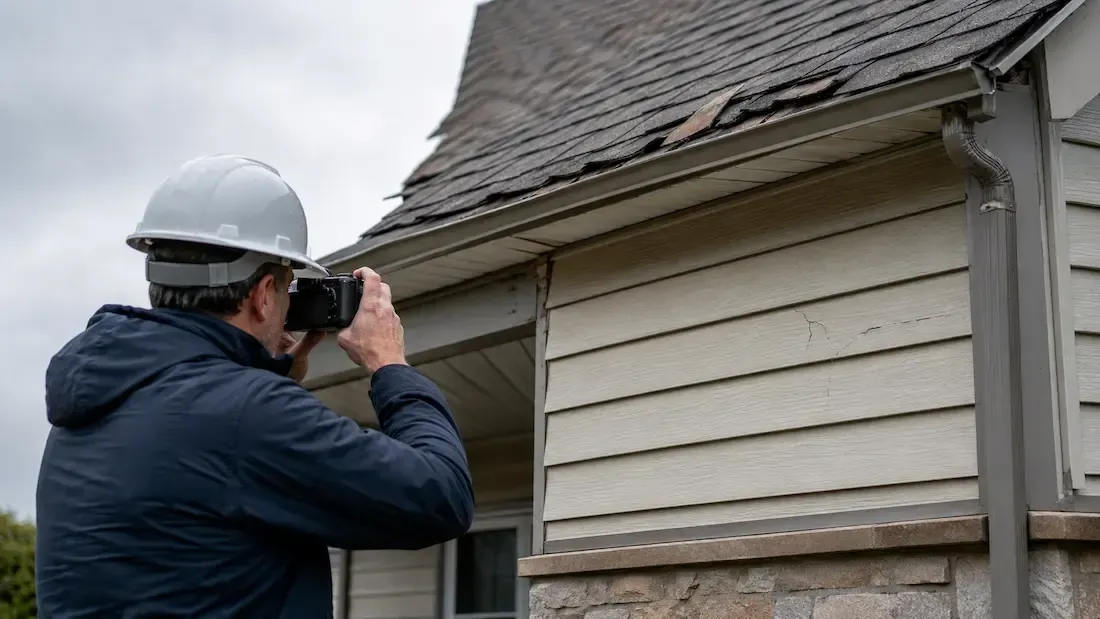
For example, an HVAC cause-and-origin investigation following a severe weather event might consider whether exterior equipment shows evidence of impact, wind-related displacement, water exposure, electrical damage, or another condition consistent with the reported event.
The engineer may also evaluate whether the observed damage appears more consistent with:
- Normal wear
- Corrosion
- Long-term moisture exposure
- Fatigue
- Lack of maintenance
- Improper installation
- Previous repairs
- Manufacturing-related issues
- Electrical malfunction
- Refrigerant problems
- Mechanical component failure
Timing is important, but physical evidence is usually necessary to connect the timing of an event to a specific failure.
Engineers may compare reported loss information with weather records, photographs taken near the date of loss, maintenance records, service history, and observed damage patterns. When previous service documentation exists, it can help establish whether similar problems were present before the reported incident.
In some cases, the available evidence may strongly support one failure mechanism. In others, the equipment may have been repaired, replaced, dismantled, or discarded before the investigation, limiting what can reasonably be determined.
A technically responsible conclusion should reflect those limitations rather than implying greater certainty than the evidence supports.
Storm Damage, Equipment Breakdown, and Mechanical System Failure
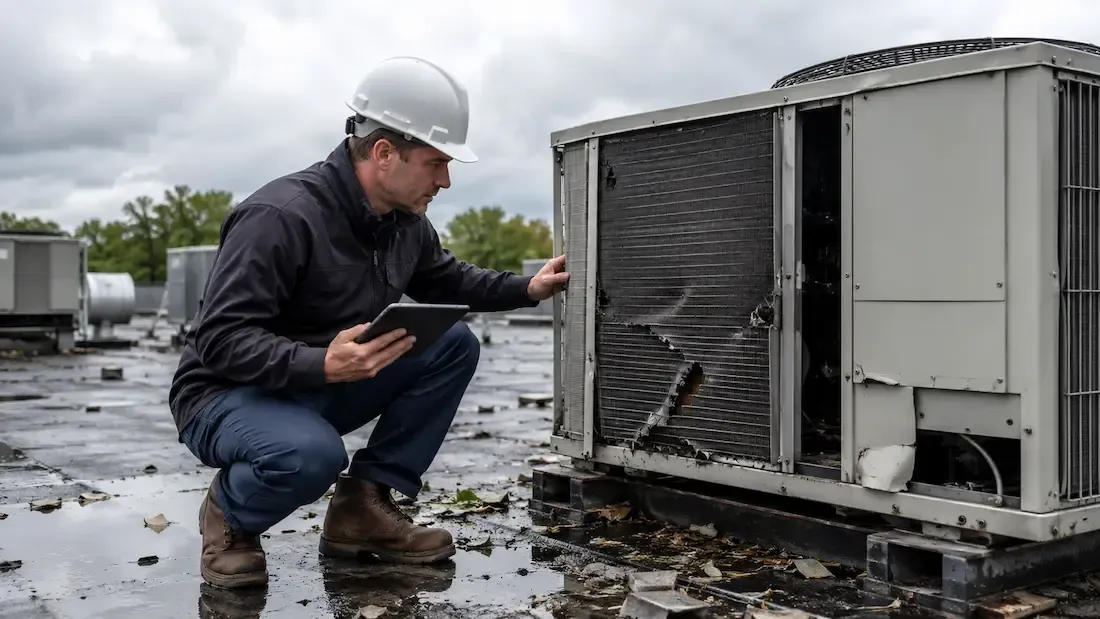
HVAC equipment can be exposed to environmental and mechanical conditions throughout its service life. Outdoor condensers and rooftop units may experience wind, rain, hail, debris, temperature changes, corrosion, and other environmental stresses.
When a failure is reported after a storm, the investigation may examine whether the equipment contains physical evidence consistent with storm-related forces.
For example, engineers may inspect for:
- Bent or displaced components
- Impact marks
- Damaged fan blades
- Cabinet deformation
- Loose or displaced equipment
- Damaged supports
- Refrigerant line damage
- Water intrusion
- Electrical component damage
- Debris impact
However, exterior damage does not automatically mean that the storm caused the operational failure. Cosmetic deformation, for instance, may not affect system function, while an internal mechanical failure may be unrelated to exterior conditions.
Conversely, some significant mechanical damage may have limited visible evidence from the outside.
Equipment breakdown can also result from internal component failures. Compressors, motors, bearings, fans, pumps, contactors, capacitors, controls, and other parts may fail because of age, operating conditions, electrical problems, mechanical stress, inadequate lubrication where applicable, overheating, or other factors.
A mechanical system failure investigation therefore considers how the failed component functions within the system rather than evaluating it in isolation.
The engineer may also consider whether one problem produced a secondary failure. A blocked condensate drain, for example, may lead to water accumulation. A failed fan may affect operating temperatures. Electrical irregularities may damage controls or motors.
Establishing the sequence of events can be essential to understanding the actual failure mechanism.
Frequently Asked Questions
What causes HVAC systems to fail during a property insurance claim?
HVAC systems can fail for many reasons, including mechanical component breakdown, electrical problems, storm-related damage, water exposure, corrosion, deterioration, installation deficiencies, maintenance-related conditions, or combinations of these factors.
A forensic mechanical engineer evaluates the actual equipment, available records, damage patterns, and reported circumstances before reaching a cause-and-origin conclusion.
How does a mechanical engineer determine whether a storm damaged an HVAC system?
An engineer may evaluate physical damage to exterior and internal components, equipment displacement, impact evidence, electrical conditions, refrigerant components, supports, photographs, weather information, maintenance history, and the timing of reported problems.
The analysis focuses on whether the observed conditions are technically consistent with the forces or conditions associated with the reported storm.
Can an engineer determine whether HVAC damage is old or recent?
Sometimes physical evidence and documentation can help distinguish recent damage from long-term deterioration, but the level of certainty depends on the available evidence.
Corrosion, previous repairs, maintenance records, repeated leakage, photographs, material conditions, and service history may help establish whether a problem developed progressively. If important evidence is unavailable, the engineer should identify that limitation.
Can HVAC systems cause water damage inside a building?
Yes. Condensate drainage problems, damaged drain pans, disconnected piping, frozen coils, pump failures, installation deficiencies, and other mechanical conditions may contribute to water release.
However, water near HVAC equipment may also originate from roofing, plumbing, exterior walls, or other sources. A proper investigation evaluates the physical pathway and damage pattern before determining the likely source.
Does an HVAC engineering report determine whether insurance will cover the damage?
No. A mechanical engineering report generally addresses technical matters such as equipment condition, failure mechanisms, causation, and observed damage.
Insurance coverage depends on the language of the applicable policy and the circumstances of the claim. Engineers can provide technical findings that may be considered during the claim evaluation, but they do not replace policy interpretation or legal advice.
How Mechanical Engineers Approach an HVAC Failure Investigation
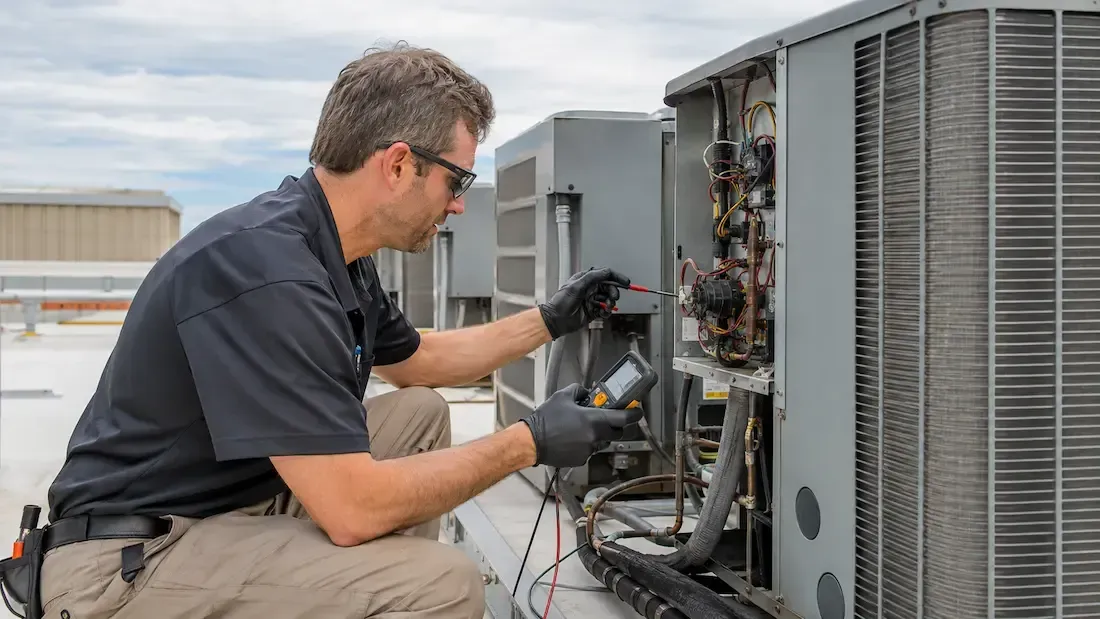
A forensic mechanical engineering investigation typically begins by defining the reported problem and understanding the circumstances surrounding the loss. The engineer may review when the system reportedly stopped functioning, what symptoms were observed, whether a weather event or other incident occurred, and whether repairs or modifications were made before the inspection.
A site inspection may then focus on both the failed component and the larger mechanical system. HVAC equipment operates as an interconnected assembly, so the visible failure of one component may be the result of a problem somewhere else in the system.
Depending on the equipment and reported conditions, an engineer may evaluate:
- Condensing units
- Compressors
- Evaporator coils
- Air handlers
- Furnaces
- Blower assemblies
- Refrigerant lines
- Drain pans and condensate piping
- Ductwork
- Rooftop units
- Chillers
- Pumps
- Control systems
- Mechanical connections
- Equipment supports and mounting conditions
The investigation may also include photographs, measurements, maintenance information, installation records, repair invoices, manufacturer information, building plans, weather data, and contractor documentation when available.
An important part of HVAC failure analysis is separating observation from conclusion. A damaged compressor, corroded coil, broken fan blade, or overflowing drain pan identifies a condition, but it does not automatically establish what caused that condition.
Engineers therefore look for physical patterns and supporting evidence that are consistent or inconsistent with potential failure mechanisms.
HVAC Water Damage and Condensate System Investigations
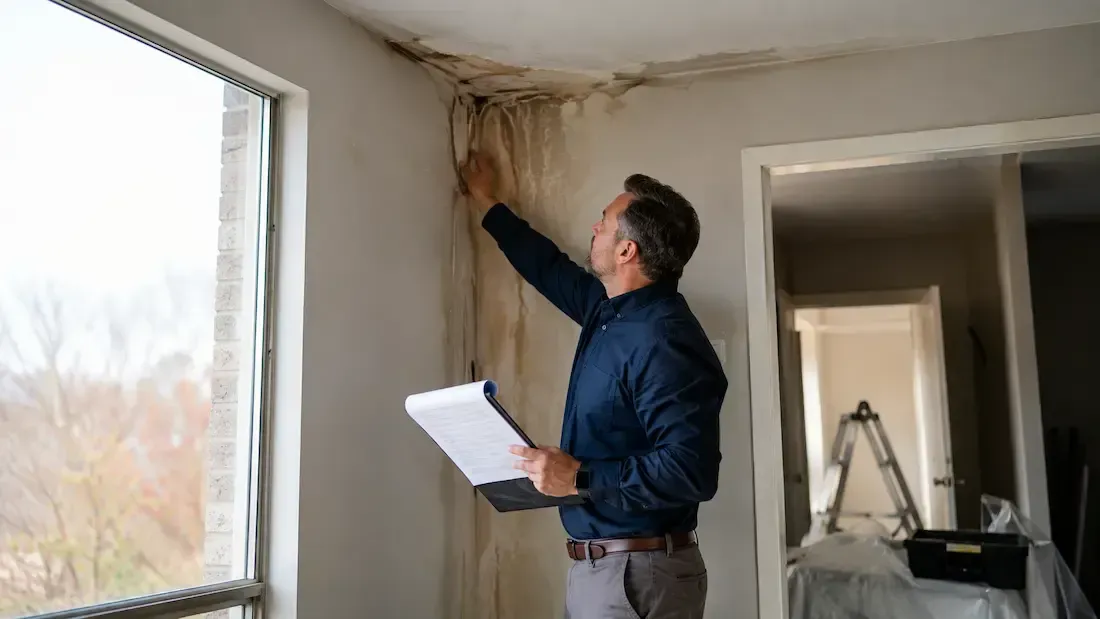
Not every HVAC-related property claim begins with equipment that stops running. Some investigations involve HVAC water damage, including water staining, ceiling damage, wet insulation, damaged finishes, or moisture around mechanical equipment.
Air-conditioning systems routinely remove moisture from indoor air. That moisture is collected and discharged through condensate drainage components. Problems with those components can potentially allow water to escape into the building.
An investigation may evaluate drain pans, condensate lines, traps, pumps, fittings, connections, slopes, insulation, equipment positioning, and signs of previous leakage.
Potential causes can include:
- Blocked condensate piping
- Cracked or deteriorated drain pans
- Disconnected drain lines
- Improper drainage configuration
- Condensate pump failure
- Frozen coils followed by thawing
- Insulation problems
- Installation deficiencies
- Long-term leakage
The location and pattern of moisture damage can provide useful information. Engineers may examine where staining begins, how water could have traveled, whether materials show evidence of repeated wetting, and whether the mechanical configuration provides a plausible path between the HVAC equipment and the damaged area.
Moisture conditions may also involve more than one source. Roof leaks, plumbing systems, exterior wall openings, drainage problems, and HVAC equipment can sometimes affect the same general area.
Because of this, identifying water near an air-conditioning system does not by itself establish that the HVAC system caused the damage.
The investigation should instead evaluate whether the physical configuration and damage pattern support the proposed source.
Installation Issues, Wear, and Pre-Existing Conditions
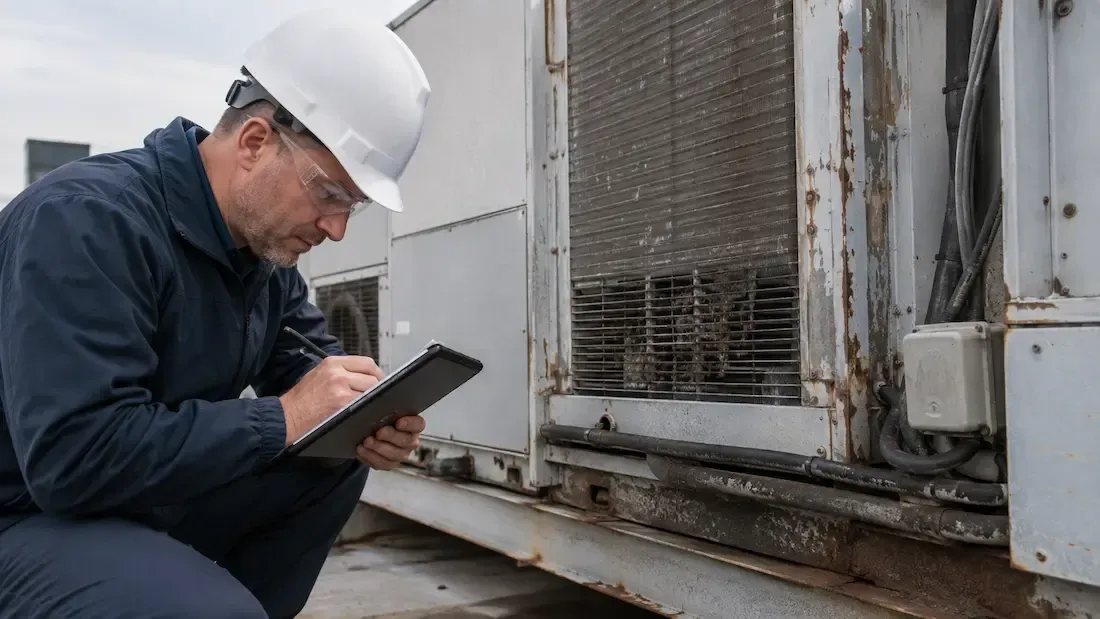
Installation and maintenance history can significantly affect how HVAC equipment performs and how a failure develops.
Improper installation may place additional stress on components or create operating conditions that reduce reliability. Depending on the system, engineers may evaluate equipment sizing, supports, drainage configuration, duct connections, refrigerant piping, clearances, mounting, electrical connections, airflow conditions, and other installation details.
Some conditions may have existed for months or years before a reported loss became noticeable.
Long-term deterioration is another important consideration in an HVAC damage insurance claim investigation. Mechanical equipment is subject to wear, corrosion, vibration, thermal cycling, and environmental exposure throughout its service life.
An engineer may consider:
- Equipment age
- Visible corrosion
- Previous repairs
- Maintenance frequency
- Component condition
- Repeated service calls
- Operating environment
- Signs of long-term leakage
- Material deterioration
- Previous performance complaints
Maintenance history can be particularly useful when determining whether a problem appears sudden or progressive.
For example, repeated service records describing refrigerant loss, drainage problems, electrical issues, or poor system performance may provide context for conditions observed after a reported event.
At the same time, the absence of maintenance records does not automatically establish a particular cause. Engineers must work with the evidence that is available and explain any limitations.
The objective is not to assume that age or deterioration caused the failure simply because the equipment is older. Instead, those factors should be considered alongside the actual physical evidence.
How Engineering Findings Support Property Damage Evaluations
A mechanical engineering investigation can provide objective technical information when the cause, extent, or mechanism of an HVAC loss is uncertain or disputed.
The final engineering analysis may document the equipment inspected, observed conditions, available records, testing or measurements performed when appropriate, relevant photographs, reported history, and the technical basis for the engineer's conclusions.
The scope of the investigation depends on the specific circumstances.
In some cases, the central question may be whether a reported storm caused an equipment failure. In another, it may involve determining the source of water damage. Other investigations may focus on installation deficiencies, equipment breakdown, mechanical failures, or whether observed conditions developed over time.
Engineering findings can also help distinguish between damaged components and components that remain serviceable. This distinction may be relevant when contractors, consultants, property owners, or insurance professionals are developing repair scopes or evaluating proposed work.
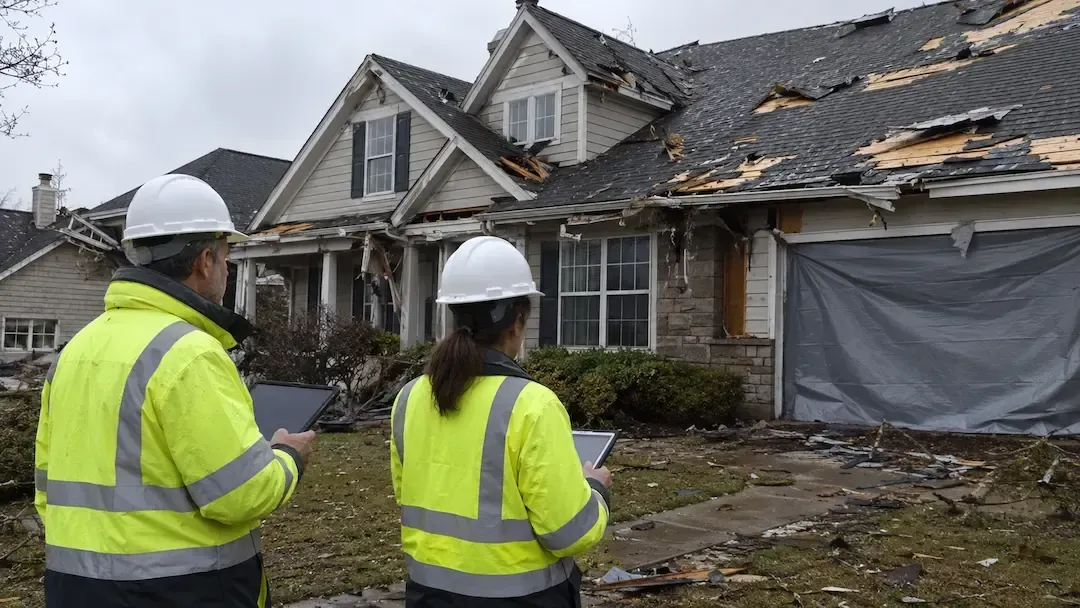
When a property involves broader structural, envelope, or construction concerns, mechanical findings may also need to be considered alongside Forensic Structural Engineering or Building Consulting evaluations. Large property losses may additionally involve coordinated Catastrophe Response assessments across multiple building systems.
The engineer's role is not to decide whether a particular condition is covered by an insurance policy. Coverage depends on the applicable policy and circumstances.
Instead, a mechanical engineer insurance claim evaluation can help answer technical questions such as:
- What failed?
- How did it fail?
- What physical evidence is present?
- Is the damage consistent with the reported event?
- Are there signs of deterioration or previous problems?
- Did installation conditions contribute?
- What components appear affected?
- What limitations affect the investigation?
When these questions cannot be resolved through photographs or contractor observations alone, an independent Mechanical Engineering evaluation may provide a more detailed technical record.
Texas Piers Consulting provides engineering and building consulting services for property damage investigations involving mechanical systems and other building components. When causation, damage scope, or repair considerations require technical evaluation, documented engineering findings can help stakeholders better understand the physical evidence associated with the loss.
You might also like